How to Build Lasting Habits with ADHD: A Practical Guide

Personal note: As someone who has lived in Germany, Denmark, Japan, and the United States, I've had to rebuild my routines over and over again. Every move meant starting from scratch: new work, new cultures, new languages, and new daily rhythms. I've learned that lasting habits don't come from being more disciplined than everyone else. They come from creating systems that are small enough, flexible enough, and realistic enough to survive real life. That's exactly the approach I try to share with my clients, and I hope this article encourages you to be a little more patient - and a little kinder - with yourself as you build habits that truly last.
Have you ever noticed how easy it is to make ambitious plans and how much harder it is to keep them? Maybe you've decided that this is the week you'll finally start studying every day. Or perhaps you've promised yourself you'll exercise regularly, keep your home organized, learn a new language, or stop leaving everything until the last minute.
For a few days, everything goes beautifully. You're motivated. You have a color-coded schedule. You've downloaded a new app, bought a beautiful planner, and you're convinced that this time will be different. Then life happens.
You have a stressful day at work. You miss one study session. You sleep in one morning. Suddenly the carefully planned routine begins to unravel, and within a week you're back where you started, wondering why building good habits seems so easy for everyone else.
If you've had this experience, you're certainly not alone. In fact, it's one of the most common topics my clients bring up during coaching sessions. Students want to develop better study habits. Professionals want to stop procrastinating on important projects. Parents want to create calmer family routines. Almost everyone wants to make lasting changes but many feel discouraged after years of trying.
The encouraging news is that most people aren't failing because they lack discipline. They're failing because they're using strategies that don't match the way their brain actually works.
Why building habits can feel so difficult with ADHD
Building new habits is challenging for almost everyone. But for people with ADHD, it often feels like climbing a mountain while everyone else is walking up a gentle hill. One reason is executive functioning. Executive functions are the brain's management system. They help us plan, prioritize, start tasks, shift our attention, monitor our progress, and keep going when something becomes boring or repetitive. When executive functioning is more difficult, as it often is with ADHD, even simple routines can require an enormous amount of mental effort.
There's another factor that many people don't realize. People with ADHD often don't struggle with motivation itself; they struggle with consistent motivation. Many of my clients can focus intensely when something is new, interesting, urgent, or personally meaningful. At the beginning of a new habit, motivation is often high. We feel excited about the possibilities and imagine how different our lives will be in just a few weeks.
Then the novelty fades. The habit becomes ordinary. Progress slows down. Suddenly the same task requires much more effort than it did during those enthusiastic first few days. This doesn't mean you've become lazy or lost your willpower. It's simply how many ADHD brains respond to changing levels of interest and stimulation. Understanding this can be incredibly freeing because it shifts the question from "What's wrong with me?" to "How can I work with my brain instead of constantly fighting against it?"
The biggest habit-building mistake
One pattern I've noticed repeatedly, both in my own life and in my work with clients, is that we tend to confuse motivation with capacity. Feeling highly motivated doesn't automatically mean we can successfully change five areas of our lives at once. Imagine you haven't exercised in months. One morning you wake up feeling inspired and decide you'll run five days a week. Or perhaps you sign up for a marathon because having a big goal feels exciting. For the first week, things go surprisingly well. The second week is harder. By the third week, you're exhausted, you've missed several runs, and eventually the whole plan disappears.
The exact same thing happens with studying. A university student decides they'll study for two hours every evening. Someone learning German promises themselves they'll memorize fifty new vocabulary words every day. A professional commits to writing for an hour before work each morning. These goals sound impressive. They also sound completely reasonable when we're feeling motivated. But motivation is a terrible predictor of what we'll still be doing six weeks from now.
Why starting small is actually faster
One of the biggest surprises for many of my clients is this: If you want to make faster progress, start more slowly. At first glance, that sounds completely backwards. Surely doing more should produce faster results? Not necessarily.
Imagine you're learning French. You decide to learn five new words every day. Five words doesn't sound like much. But after a week, you're no longer reviewing just today's five words. You're also revisiting yesterday's vocabulary, strengthening older memories, and giving your brain repeated opportunities to retrieve what it has already learned. Learning builds on itself.
The same principle applies to almost every habit. A five-minute walk often becomes a twenty-minute walk. Reading one page frequently turns into reading ten. Opening your textbook "just for five minutes" is often enough to overcome the hardest part of studying - getting started.
Tiny habits don't work because they're magical but because they remove the biggest obstacle: overwhelm. Instead of asking your brain to make a huge leap, you're simply asking it to take one small step. That feels manageable, even on difficult days. And consistency, far more than intensity, is what creates lasting change.
Building self-trust one small step at a time
One aspect of habit building that often gets overlooked is self-trust. Every time we make ourselves a promise and don't follow through, we lose a little confidence in our ability to change. Over time, many people with ADHD begin telling themselves stories like: "I never finish what I start." "I have no self-discipline." "I'll probably give up anyway." After years of repeating these thoughts, they begin to feel like facts. But what if those beliefs are based on unrealistic expectations rather than reality?
If you've spent years setting goals that required you to become a completely different person overnight, it's no wonder those goals were difficult to maintain. The problem wasn't that you couldn't change but that you expected too much, too quickly. Every time you follow through on a small promise, even something as simple as studying for five minutes or taking a short walk, you collect evidence that you can rely on yourself. Those small successes may not feel impressive in the moment, but they gradually rebuild something much more important than motivation: confidence. And confidence makes the next habit a little easier.
Beware of all-or-nothing thinking
Another obstacle I frequently see is all-or-nothing thinking. Many of us unconsciously believe that if we can't do something perfectly, there's little point in doing it at all. If we planned to study for an hour but only have twenty minutes, we skip studying altogether. If we miss one workout, we tell ourselves we'll start again next Monday. If we eat one unhealthy meal, we decide the whole day is ruined.
This mindset is particularly common among adults with ADHD because we've often experienced years of frustration and inconsistency. We become so focused on doing things "the right way" that we overlook the value of simply doing something. But progress is rarely linear. There will be days when you're tired, overwhelmed, stressed, or simply not in the mood. Those days don't erase everything you've accomplished. In fact, the habits you maintain on difficult days are often the ones that become permanent. One missed day doesn't matter. What matters is coming back.
Make good habits easier to start
We often think habits depend on motivation. In reality, they often depend on reducing friction. The easier it is to begin, the more likely you are to follow through. Instead of relying on willpower every morning, ask yourself: "How can I make this habit almost impossible not to do?" For example:
Leave your study materials on your desk instead of putting them away.
Pack your gym bag the night before.
Put your walking shoes next to the front door.
Decide exactly when you'll study instead of hoping you'll "find time."
Set a timer for just five minutes.
Many people are surprised to discover that starting is often the hardest part. Once you've opened the book, put on your shoes, or sat down at your desk, continuing becomes much easier.
Don't wait for motivation
One of the biggest myths about productivity is that motivated people simply feel like doing things more often. That's rarely true. Successful habits aren't built because people feel inspired every day. They're built because people make it easy to begin, even on days when motivation is nowhere to be found. One strategy I often recommend is attaching a new habit to something you already do automatically. For example:
After I make my morning coffee, I'll review five vocabulary words.
After dinner, I'll spend ten minutes organizing tomorrow's tasks.
After brushing my teeth, I'll read one page of my book.
This technique, often called habit stacking, reduces the number of decisions your brain has to make. Instead of asking yourself when you'll study or exercise, the existing routine becomes your reminder. The fewer decisions you have to make, the easier habits become.
If you miss a day, simply begin again
Life will interrupt your routines. You'll get sick. You'll go on holiday. You'll have busy weeks at work. You'll have family emergencies. None of these situations mean you've failed. One of my favorite principles is this: Never let one missed day become two. Missing a day is normal. Giving up because you missed one day is what breaks the habit.
Instead of asking, "Have I ruined my progress?", ask yourself, "What's the smallest step I can take today?" Sometimes that step will be five minutes. Sometimes it will be thirty. Both count. The habit isn't defined by one perfect day but by returning, again and again.
Better study habits start with better systems
If you're a student, chances are you've experienced the cycle of procrastination followed by frantic last-minute studying. Unfortunately, this approach doesn't just create stress; it also makes learning much less effective. Strong study habits aren't about studying for longer hours. They're about studying more consistently.
That might mean reviewing your lecture notes for ten minutes after class instead of cramming before an exam. It might mean using active recall instead of simply rereading your textbook. Or breaking one intimidating assignment into several smaller tasks that feel easier to begin. Small changes like these often have a much bigger impact than dramatically increasing the number of hours you study.
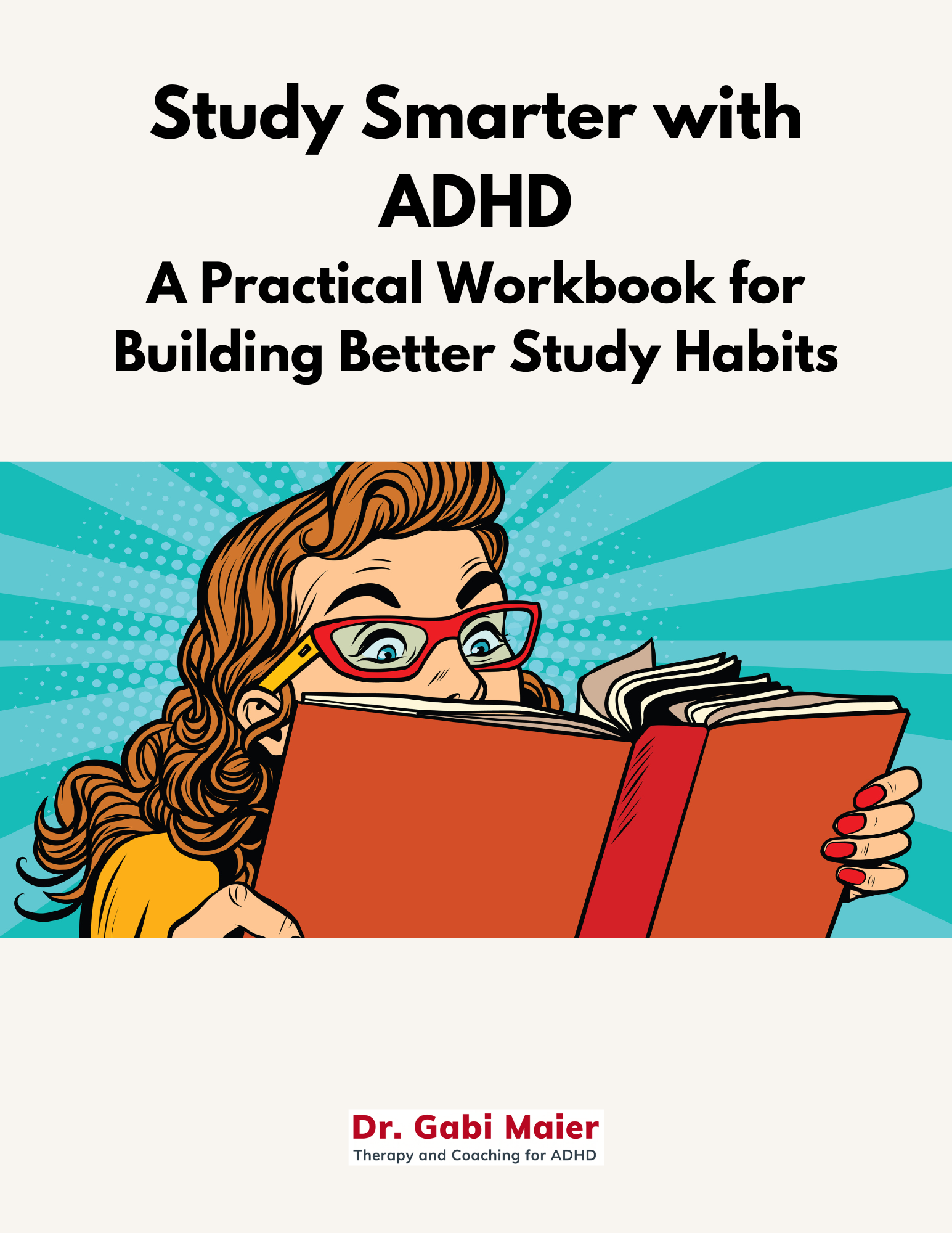
Want Better study Habits?
Reading about better study habits is one thing - putting them into practice is another. That's why I created my free Study Smarter with ADHD Workbook. Instead of asking you to study longer or simply "try harder," it gives you practical, ADHD-friendly strategies you can start using right away.
👉 Download your free workbook here.
Final Thoughts
One of the most important lessons I've learnt, both personally and through years of working with students and adults with ADHD, is that meaningful change rarely happens through dramatic transformations. It happens through ordinary days. Days when you choose to read one page, review five flashcards, write one paragraph, or go for a short walk. These small actions rarely feel remarkable in the moment; yet they quietly shape the person you're becoming.
So if you're trying to build healthier routines, better study habits, or simply create a little more structure in your life, remember this: You don't need to become a different person tomorrow. You only need to take the next small step today. Your future habits won't be built by occasional bursts of motivation. They'll be built by the small promises you keep to yourself again and again. And that's good news. Because small promises are ones you can start keeping today.
Frequently Asked Questions
Why is it so hard to build habits with ADHD?
People with ADHD often struggle with executive functioning, motivation, and time blindness. These challenges can make it difficult to start tasks consistently, even when they're highly motivated.
How long does it take to build a habit?
A commonly cited study found that habits take an average of about 66 days to become automatic. However, the exact time varies depending on the person, the behavior, and how consistently it is repeated.
Should people with ADHD start with small habits?
Yes. Small, manageable habits reduce overwhelm and make consistency more achievable. Building confidence through small successes is often more effective than setting ambitious goals that are difficult to maintain.
What is the best way to create a study routine with ADHD?
Start with a realistic daily goal, study at the same time whenever possible, reduce distractions, and focus on consistency rather than long study sessions. Using external supports such as timers, reminders, or accountability can also help.
Can habits improve ADHD symptoms?
Habits won't eliminate ADHD, but consistent routines can reduce decision fatigue, improve organization, support time management, and make everyday life feel more manageable.
Did this article resonate with you?
If you often find yourself struggling with your ADHD symptoms and would like some support, I'd be happy to help. Together, we'll develop practical strategies that fit your life, your strengths, and your goals. In a free 30-minute consultation, we'll explore whether my approach is the right fit for you.
For teenagers (15+) and adults.
Enjoyed this article?
Every other week, I publish a new article with evidence-based insights and practical strategies to help you better understand and manage ADHD in everyday life.