When Lying Isn’t the Real Problem: A New Approach to Dealing With Your Neurodivergent Child’s Dishonesty
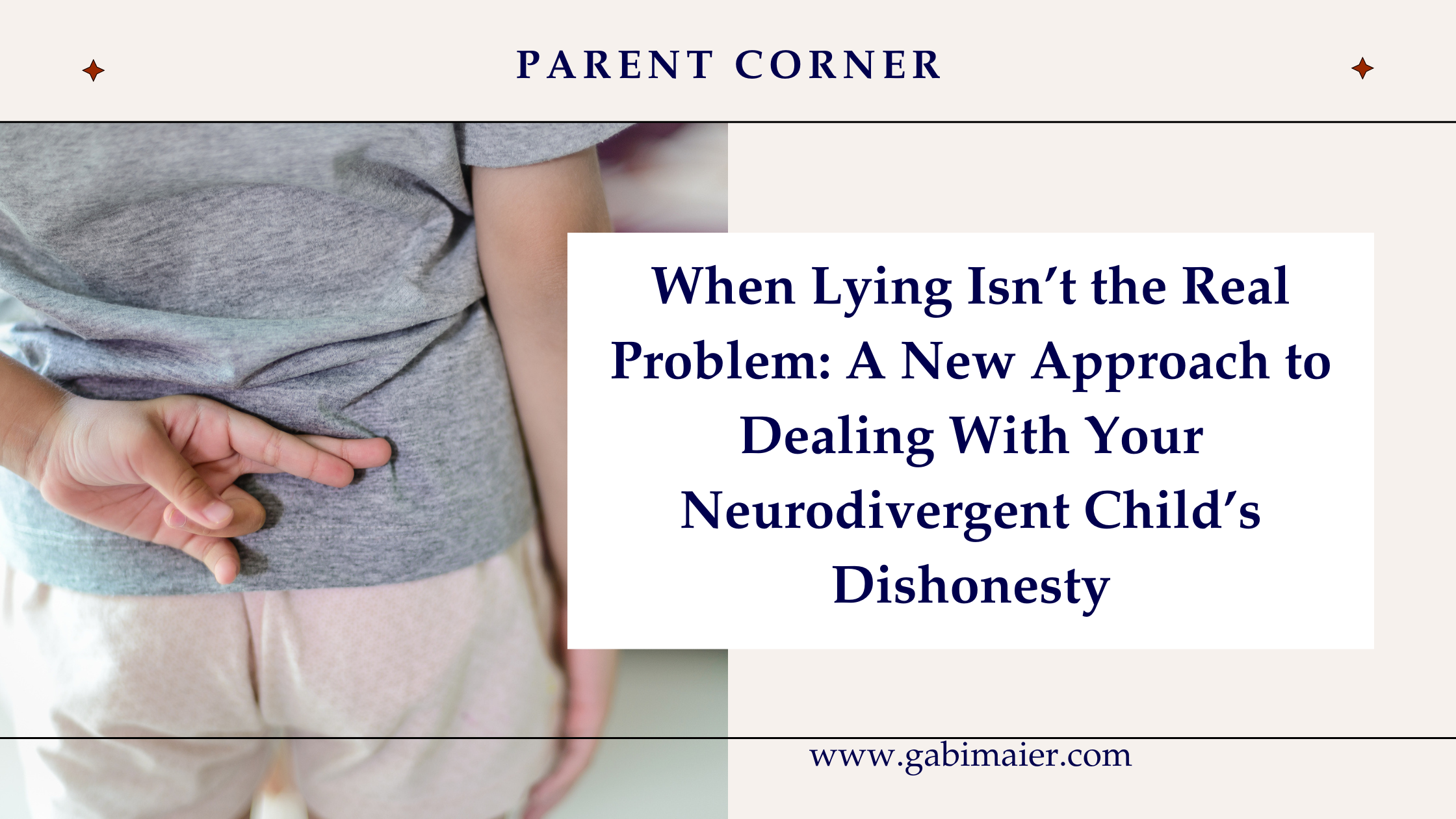
There is a particular kind of silence in our house that makes me uneasy. It’s not the peaceful kind. Not the kind that signals deep concentration or imaginative play. It’s the kind of silence that feels… suspicious. If you have a neurodivergent child, you probably know exactly what I mean.
Screens have always held a powerful attraction for my son. Video games, YouTube, anything with fast movement and endless novelty. I understand why. His brain craves stimulation in a way that the ordinary world often cannot provide. Screens offer instant relief from boredom, instant reward, instant dopamine. Compared to homework, chores, or even creative play, they are simply more compelling.
My husband and I try to keep screens under control. We have rules. We have limits. We do our best to create structure. But my son is creative and determined, and he has learned how to find opportunities when our attention is elsewhere.
And so sometimes, when the house falls into that suspicious silence, I already know. Still, I ask. “Have you been on a screen?” He looks up at me, calm and steady, and says, “No.” Even when I know the answer is yes.
The part that troubled me most
In the beginning, this unsettled me deeply. It wasn’t just the screen use. It was the lying. The ease with which he denied something so obvious. I worried about what it meant. Was this a character issue? Was he becoming dishonest? Was I failing to teach him something essential?
It took time and a lot of reflection for me to understand what was really happening. My son was not lying because he was manipulative or immoral. He was lying because he was overwhelmed.
For children, especially neurodivergent children, the loss of control can feel deeply threatening. They live in a world where they are constantly corrected, constantly asked to do things that are harder for them than for others. When they break a rule, even unintentionally, the possibility of disappointment or consequences can feel unbearable. Lying becomes a way to escape that moment. A way to restore safety.
Underneath the lie was not defiance, but vulnerability. He wasn’t thinking, “How can I deceive my parents?” He was thinking, “How can I avoid this terrible feeling right now?”
Making honesty feel safe
Once I understood this, my response began to change. I remember one afternoon when I found clear evidence that he had used a device when he wasn’t supposed to. I felt the familiar wave of frustration rising in my chest. My instinct was to confront him, to demand the truth.
Instead, I took a breath and said something different. “You’re not in trouble. I just want to understand what happened.” I could see the shift immediately. His shoulders relaxed. His eyes softened. And after a pause, he told me the truth. It struck me then how much courage honesty requires, especially when you expect punishment. From that moment on, I began to focus less on forcing honesty and more on creating safety for honesty.
Separating the behavior from the child
I learned to separate his behavior from his identity. Instead of saying, “Why are you lying?” I would say, “Using the screen without permission wasn’t okay.” This may sound like a small difference, but it is enormous. One attacks the child. The other addresses the behavior. Children need to know that their mistakes do not define who they are. When children feel that their worth is intact, even when they make mistakes, they no longer need to protect themselves through denial.
Catching honesty in the moment
I also began to notice and acknowledge his honesty whenever it appeared. One evening, he admitted without prompting that he had watched something he wasn’t supposed to. I saw how difficult it was for him to say it. Instead of reacting with anger, I said, “Thank you for telling me the truth. I know that wasn’t easy.” I could see pride flicker across his face. That moment mattered more than any punishment ever could. Honesty grows where it is recognized and valued.
Children learn what we model
I also realized that children learn honesty not from lectures, but from example. When I made mistakes, I began to name them openly.
“I was wrong.”
“I made a mistake.”
“I’m sorry.”
I wanted him to see that mistakes are survivable. That they do not destroy relationships. That they do not make you unworthy of love. Children learn far more from what we model than from what we demand.
What changed over time
Over time, something subtle but powerful began to shift. The lies became less frequent. Not because he suddenly developed perfect impulse control. Not because screens became less tempting. But because he no longer needed the lie in the same way. Honesty had become safer.
What I have come to understand is that lying is often a form of protection. Children lie to protect themselves from shame, from disappointment, from the fear of losing connection. This is especially true for neurodivergent children, who often carry a fragile sense of self-worth after years of feeling different or falling short of expectations.
When we respond to lies with anger, interrogation, or shame, we reinforce the very fear that caused the lie in the first place. When we respond with calm, clarity, and safety, we make honesty possible.
The goal is not perfect behavior - it is trust
My son still struggles with screens. He still makes impulsive choices. And yes, sometimes he still lies. But now, more and more often, he tells the truth. And every time he does, I see it for what it really is, not just honesty, but trust. Trust that he is safe enough to be imperfect. Trust that his mistakes will not cost him our love. And that, more than perfect compliance, is what I hope to give him.
If you need help and support with your ADHD symptoms, book a free discovery call - and we can figure it out together!
And if you like to stay up-to-date on my future blog posts, subscribe to my newsletter: