When Neurotypes Clash: Navigating Love in Neurodiverse Relationships
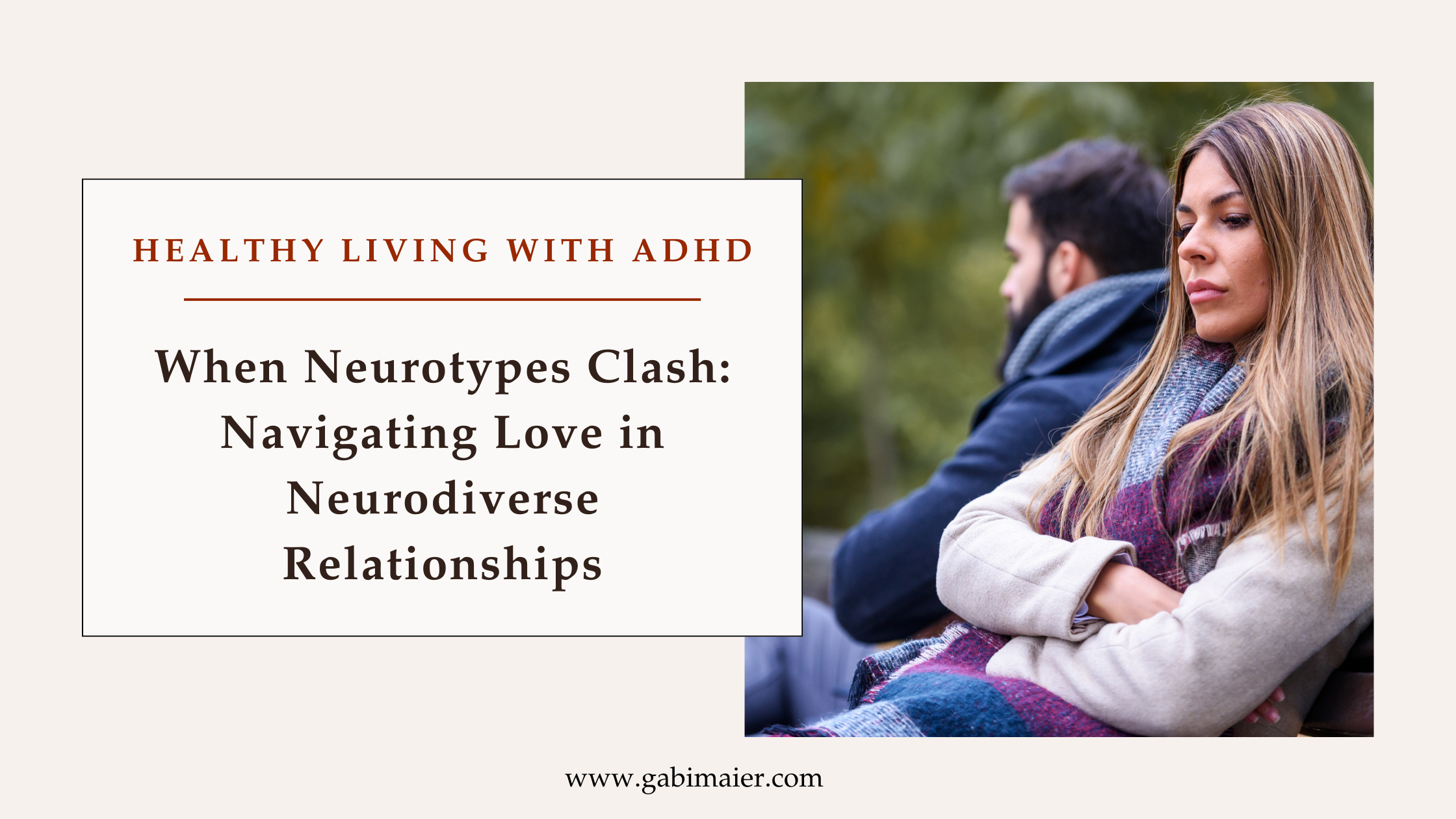
There’s a particular kind of tension that shows up in relationships where two people love each other deeply and still feel like they’re speaking entirely different languages. Couples who care, who try, who genuinely want to make things work… and yet find themselves caught in the same arguments over and over again. One partner feels unheard, the other feels constantly criticized. Expectations go unmet. Frustration builds. Sometimes it turns into resignation. Sometimes into something heavier like sadness, or even depression.
I know this dynamic not just professionally, but personally. My own relationship has, at times, felt like a negotiation between two different operating systems. We don’t always see the same priorities. We don’t move through the world at the same pace. What feels obvious to one of us can be completely opaque to the other. And when those differences collide in everyday life, be it chores, time management, or communication, it can be exhausting.
So why does this happen so often when two different neurotypes come together?
Part of it is that we tend to assume that the way we experience the world is the “default.” If something feels easy or intuitive to us, we expect it to be the same for our partner. If we handle a situation in a certain way, we unconsciously believe that they should too. When that doesn’t happen, it’s easy to interpret it as lack of effort, lack of care, or even resistance.
But when neurotypes differ, whether that’s ADHD, autism, or other ways of processing and responding to the world, those assumptions don’t hold. What looks like avoidance might actually be overwhelm. What feels like rigidity might be a need for predictability. What appears to be inattentiveness might be a different way of regulating attention. Without understanding this, both partners can end up feeling hurt for reasons that were never intended.
The first shift that often changes everything sounds simple, but it’s not easy: listening. Not listening to respond, not listening to correct, not listening to prove a point, but listening to understand. Truly taking in what the other person is saying without filtering it through your own expectations. It requires putting aside, just for a moment, the internal voice that says, “But that doesn’t make sense,” or “That’s not how it should be.” When we listen without prejudice, we create space for something new to emerge. Often, beneath the surface of frustration, there’s vulnerability. Fear of not being enough, fear of failing, fear of losing the connection.
Closely connected to that is the ability to step into the other person’s shoes. And this is where things get uncomfortable. Because it’s one thing to intellectually understand that your partner experiences the world differently. It’s another to sit with that difference without trying to fix it. To imagine, for example, what it might feel like if everyday tasks required significantly more mental energy. Or if social interactions felt unpredictable and draining. Or if your mind constantly jumped between ideas, making it hard to hold onto a single thread. That kind of perspective-taking doesn’t mean you agree with everything your partner does. But it softens the edges. It makes compassion possible where there was previously only irritation.
Another piece that I see making a real difference is psychoeducation. Not in a dry, clinical sense, but as a shared curiosity. When both partners take the time to learn about how different neurotypes function; how attention, emotion regulation, sensory processing, and executive functioning can vary, it changes the narrative. Suddenly, behaviors that once felt personal start to make more sense. It becomes less about “you’re doing this to me” and more about “this is how your brain works.” That shift alone can take a lot of pressure out of the relationship.
But understanding is only one part of the equation. At some point, there has to be a meeting in the middle. And this is where things often get stuck.
I see this especially in couples where one partner, often the neurotypical one, sets the standard for how things “should” be done. There’s an unspoken assumption that their way is the baseline, and the other person needs to adapt. The problem is that these expectations are often not realistically achievable for the other partner. When those expectations aren’t met, it leads to disappointment, which then feeds into conflict.
A more sustainable approach is to actively look for compromises that take both perspectives into account. Not a one-sided adjustment, but a genuine negotiation. What does “good enough” look like for both of us? Where can I stretch a little, and where do I need understanding in return? These conversations can be uncomfortable, because they challenge long-held beliefs about fairness and responsibility. But they’re essential if the relationship is going to feel balanced rather than burdensome.
Beyond that, there are a few shifts that can quietly transform the dynamic. One is making the invisible visible. Many conflicts arise not because one person isn’t doing anything, but because their effort looks different or goes unnoticed. Naming what each person is contributing whether it’s emotional labor, problem-solving, or simply showing up consistently can change the tone of the relationship.
Another is adjusting expectations around timing and energy. Not everything has to happen in the same way or at the same speed. Flexibility here can reduce a surprising amount of tension. It’s less about lowering standards and more about aligning them with reality.
And then there’s the importance of repair. Even in the best relationships, misunderstandings happen. Words land wrong. Emotions escalate. What matters is not avoiding conflict entirely, but being able to come back from it. To say, “That didn’t go well, but we’re still on the same team.”
Sometimes, though, even with the best intentions, couples find themselves stuck in patterns they can’t seem to shift on their own. That’s where external support can make a real difference. Working with a coach or therapist who understands neurodivergence can open up conversations that feel too charged to have alone. A third party can help translate, clarify, and create structure where things have felt chaotic. I’ve seen moments in those settings where something clicks, where both partners suddenly feel seen in a way they hadn’t before.
Of course, this only works if both people are willing to engage in that process. And that’s not always the case. If one partner isn’t open to seeking help, it can feel incredibly frustrating, even isolating. In those situations, the focus often has to shift, at least temporarily, from changing the relationship to understanding your own position within it. What are your needs? Where are your limits? What are you willing to accept, and what isn’t sustainable for you long-term? These aren’t easy questions, but they’re important ones.
At the heart of all of this is a simple, but powerful premise: most couples in this situation care deeply about each other. They’re not fighting because they want to hurt one another. They’re fighting because they’re trying, sometimes desperately, to make something work that doesn’t come naturally. And maybe that’s the real work. Not making everything easy, but learning how to stay connected even when it isn’t.
If you need help and support with your ADHD symptoms, book a free discovery call - and we can figure it out together!
And if you like to stay up-to-date on my future blog posts, subscribe to my newsletter: