Why People with ADHD Struggle to Relax
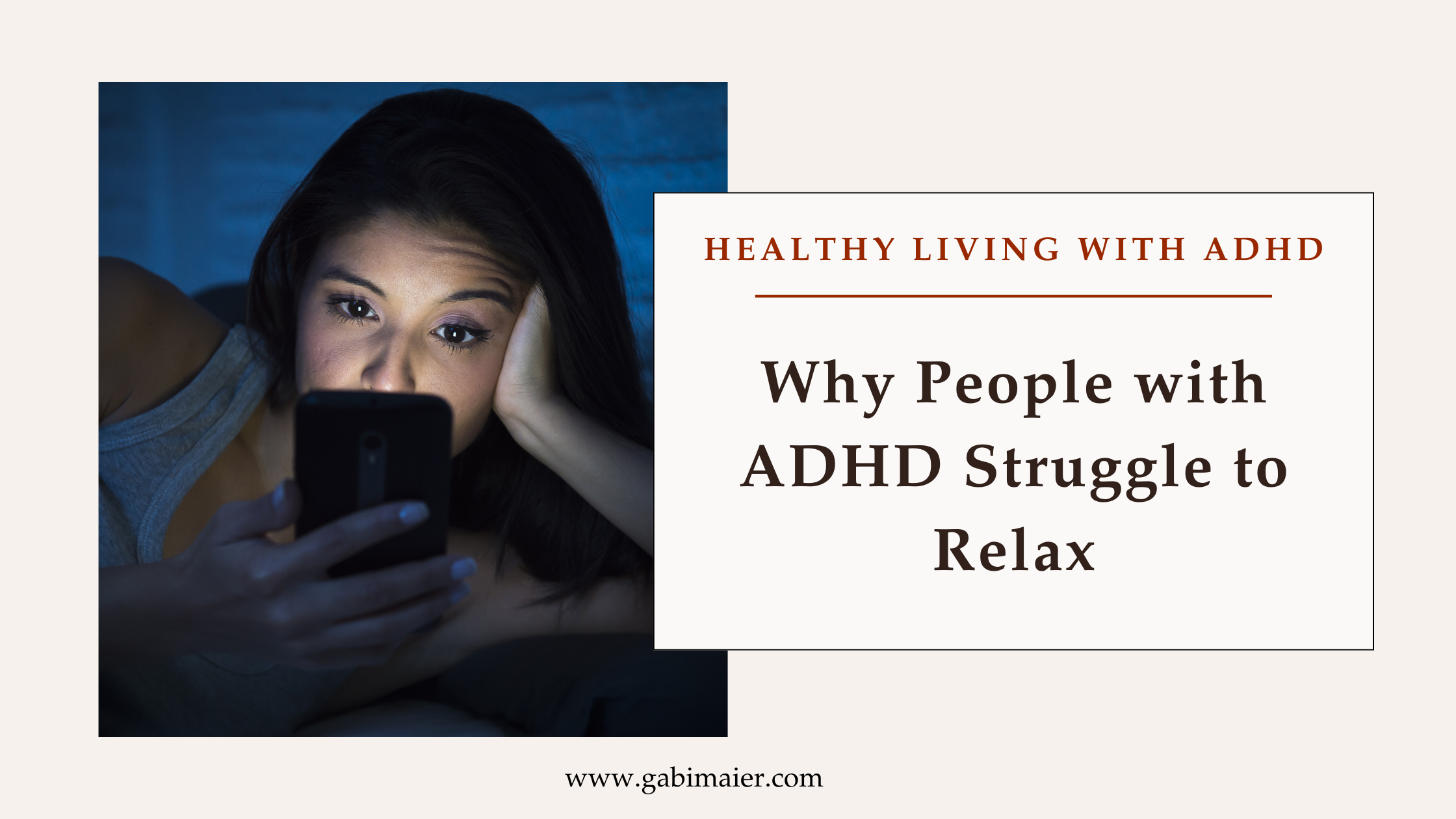
After a long day, most of us know what we should do. We should put our phone away, get ready for bed, maybe read a book, take a warm shower, or simply go to sleep. And yet, many of us with ADHD find ourselves doing the exact opposite. We sit down on the couch and start scrolling through social media. We watch one more episode on Netflix. Then another. We fall down a YouTube rabbit hole. And we stay up far later than we intended and we wonder: "Why am I doing this? I'm exhausted."
If this sounds familiar, you're not alone. In fact, this is a very common struggle with neurodivergent people. Many of us are tired. Really tired. We are juggling school, work, family responsibilities, deadlines, and the endless mental load that often comes with ADHD. Yet when we finally have a moment to ourselves, we don't rest. Instead, we seek more stimulation. At first glance, this can seem confusing. If we're exhausted, shouldn't relaxation come naturally?
Not necessarily. One of the biggest misconceptions about rest is that exhaustion automatically leads to recovery. For many people with ADHD, that's simply not how it works.
Stimulation is not the same as restoration
This is one of the most important ideas I want people with ADHD to understand. Many of the activities we turn to when we're tired are actually stimulating rather than restorative. Scrolling through social media feels easy. Watching videos feels relaxing. Playing games, checking messages, online shopping, or browsing random websites can all feel like a break. But often, these activities are still asking something of our brain.
They provide novelty.
They provide dopamine.
They keep us engaged.
What they don't always provide is true recovery. There is nothing wrong with enjoying social media, television, or gaming. The problem arises when we mistake stimulation for rest. A person can spend three hours on their phone and still feel completely depleted afterward. Many of my clients describe this experience perfectly: “I didn't do anything all evening, but somehow I'm still exhausted.” The reason is that “doing nothing” and “recovering” are not necessarily the same thing.
Why doing nothing feels uncomfortable
Many people with ADHD have spent years operating in a state of constant motion. There is always something that needs attention.
An assignment.
A deadline.
An unanswered email.
A chore.
A forgotten task.
A problem to solve.
Even when our body finally stops moving, our mind often keeps going. For some of us, sitting quietly feels surprisingly uncomfortable. The moment things become still, thoughts rush in. Suddenly there is space to notice stress, disappointment, anxiety, loneliness, guilt, or overwhelm. And because those feelings can be uncomfortable, the brain naturally looks for something else to focus on. For something interesting, exciting, for something that provides an immediate hit of dopamine. That is why many neurodivergent people don't simply struggle with rest. They struggle with stillness.
The nervous system matters
Another piece of the puzzle is the nervous system. Many of us spend years living in a state of chronic stress. We are constantly trying to catch up. Trying not to forget something, to meet expectations, to compensate for challenges that other people don't always see.
Over time, the nervous system can become accustomed to operating at a higher level of activation. When this happens, slowing down can actually feel strange. Some people even describe relaxation as boring. Others feel restless, irritable, or uncomfortable when they try to rest. It's almost as if the body has forgotten how to shift into recovery mode. This isn't a character flaw or doesn't mean you're doing something wrong. It's simply a nervous system that has spent a long time in survival mode.
What real recovery looks like
The good news is that recovery is a skill that can be learned. And often, it starts with redefining what rest actually means. Real recovery is not always exciting. Sometimes it's surprisingly ordinary.
It might mean taking a walk without listening to a podcast.
Sitting outside for ten minutes.
Stretching.
Reading a few pages of a book.
Taking a bath.
Listening to music.
Spending time with a trusted friend.
Getting enough sleep.
None of these activities provides the intense dopamine hit that social media or binge-watching can offer. But they often leave us feeling more restored afterward. That's the major difference.
A DBT Perspective on Recovery
One of my favorite DBT skills for people with ADHD is called Self-Soothe. The idea is surprisingly simple: instead of looking for more stimulation when we're stressed or exhausted, we intentionally engage our senses in ways that help us feel calm, safe, and grounded.
Many of us automatically reach for our phones when we're tired. We scroll, watch videos, or jump from one source of stimulation to another. The problem is that these activities often keep our brains activated rather than helping them recover. Self-Soothe encourages us to slow down and ask a different question: “What would actually feel comforting right now?”
For one person, that might be wrapping up in a soft blanket and listening to calming music. For another, it might be sitting in the sunshine, taking a warm shower, lighting a scented candle, drinking a cup of tea, or spending time with a pet. The goal is not to distract ourselves from difficult feelings. The goal is to give our nervous system a chance to settle.
Many of us have become experts at seeking stimulation but have had very little practice seeking comfort. Learning the difference can be surprisingly powerful. Sometimes what we need is not another dopamine hit but a moment of genuine restoration.
Wellbeing is more than productivity
Perhaps the most important thing I want people with ADHD to hear is this: Your wellbeing is not measured by how much you accomplish. Many of us have spent years believing that rest must be earned. That we can only relax after our work is finished, the house is clean, the inbox is empty or after the next deadline has been met. But the problem is that there is always another task, another responsibility, another goal to meet. If we tie our right to rest to the completion of everything on our to-do list, we may never truly rest at all. Rest is not a reward. It is a human need. And for people with ADHD, learning how to recover may be just as important as learning how to be productive.
So, if you find yourself scrolling long after you're tired, staying up too late, or wondering why relaxation feels so difficult, please know that there is nothing wrong with you. You may simply be trying to meet a need for restoration with activities that provide stimulation instead. And that is something many of us with ADHD are still learning. But you can change that behavior: one gentle step at a time.
If you need help and support with your ADHD symptoms, book a free discovery call - and we can figure it out together!
And if you like to stay up-to-date on my future blog posts, subscribe to my newsletter: