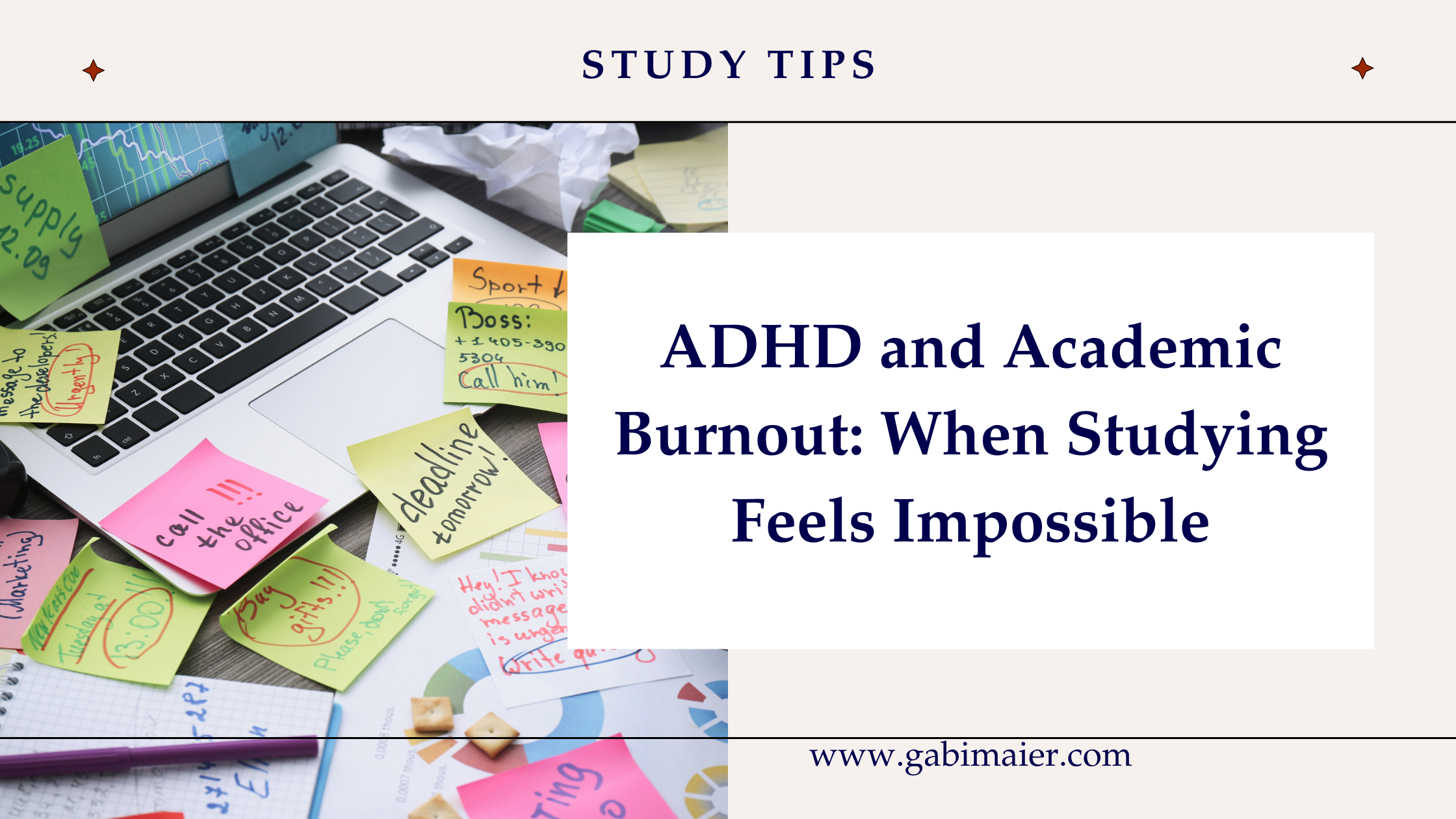
You used to care. Maybe you were the student who always pulled things together at the last minute. The one who somehow survived on adrenaline, all-nighters, and sheer determination. Maybe you worked twice as hard as everyone else just to keep up even though nobody realized how much effort it took. But then one day, it stopped working. The assignments piled up. The lectures became harder to follow. Your motivation disappeared. Even opening your laptop felt exhausting. If this sounds familiar, you may not be lazy, unmotivated, or "not trying hard enough." You may be experiencing academic burnout.
As an ADHD therapist and coach, I see this more often than many people realize. Several of my clients/patients have taken one or even two semesters off from university because they simply could not keep going. By the time they reached out for help, they were exhausted, discouraged, and convinced that something was wrong with them. But often, the problem isn't a lack of ability. More often than not the real problem behind burnout is that my clients/patients had been running a marathon while everyone around them thought they were taking a leisurely walk.
Why students with ADHD are more vulnerable to burnout
Many students with ADHD spend years compensating for executive function challenges. They create elaborate systems. They rely on panic and deadlines. They stay up late to finish assignments. They work harder than their peers just to stay organized. From the outside, they may look successful. From the inside, they often feel like they are constantly fighting their own brain. This level of effort is exhausting. Eventually, many students reach a point where they simply cannot sustain it anymore.
The strategies that got them through high school may no longer work in college or university, where there is less structure, more independence, and far greater demands on planning, time management, and self-regulation. Research reflects these experiences. A recent review of 25 qualitative studies found that university students with ADHD commonly described difficulties with organization, time management, maintaining attention, and adapting to academic expectations. The review also highlighted that standard university support does not always address the individual needs of students with ADHD. What often follows is a cycle of overwhelm: They are falling behind which makes them feel guilty. So they start working harder and become even more exhausted which leads to their falling behind even further. Over time, this can lead to burnout.
What academic burnout can look like
Academic burnout is far from unusual among university students. In a German study of more than 3,400 students, almost one-third reported frequent burnout symptoms. The findings also showed that study-related circumstances and satisfaction with one's studies were associated with different dimensions of burnout. Burnout doesn't always look like lying in bed all day. Sometimes it looks like:
Staring at your computer for hours without getting started
Feeling emotionally numb
Losing interest in subjects you once enjoyed
Constantly feeling behind
Struggling to attend lectures
Increased anxiety
Difficulty concentrating
Feeling hopeless about your future
Many students tell me: "I know what I need to do. I just can't make myself do it." That experience can be incredibly frustrating. Especially when you know how capable you are.
The hidden role of shame
One of the most painful aspects of academic burnout is the shame that often comes with it. Students compare themselves to other classmates. They wonder why everyone else seems to be coping. They tell themselves: "I should be able to do this." "What's wrong with me?" "I'm wasting my potential." The problem is that shame rarely motivates lasting change. More often, it drains the very energy needed for recovery. This is why emotional regulation is such an important piece of the puzzle. And this is where some DBT skills can be incredibly helpful.
Self-validation: Learning to stop fighting yourself
One thing I notice again and again in students with ADHD is that they are often much harder on themselves than anyone else could ever be. By the time many students reach college or university, they have accumulated years of experiences that taught them they were somehow falling short. They forgot assignments. They handed things in late. They watched classmates seem to manage life more easily. Even when they were successful, it often felt as though they were constantly scrambling to keep up. Over time, many develop an inner voice that sounds something like this: "Why can't I just get started?" "What's wrong with me?" "Everyone else seems to manage." The problem is that this constant self-criticism doesn't usually create motivation. More often, it creates shame. And shame is exhausting.
One of the skills we teach in Dialectical Behavior Therapy (DBT) is called self-validation. At its core, self-validation means acknowledging your experience without immediately judging it. That might sound simple, but for many students it is surprisingly difficult. Imagine the difference between saying: "I'm so lazy. I've wasted another day." and "I've been trying to start this assignment for hours, and I'm feeling overwhelmed." The second statement doesn't let you off the hook. It doesn't excuse the problem. It simply describes reality more accurately. Many students discover that when they stop attacking themselves, they actually have more energy available to address the challenge in front of them.
Many students are surprisingly kind to their friends and incredibly harsh toward themselves. Imagine your best friend said: "I'm exhausted. I've been struggling for months. I feel overwhelmed all the time." You probably wouldn't respond with: "Try harder." Yet many students say exactly that to themselves. Self-validation means acknowledging your experience without judgment, e.g. "It makes sense that I'm exhausted." "I've been carrying a lot for a long time." Or "I'm struggling right now, and that's okay." Validation is not making excuses. It is recognizing reality. And it is often the first step toward change.
PLEASE: Why burnout is not just a mental problem
Students are often taught to think of academic success as a matter of discipline, motivation, or willpower. But our brains do not function independently from our bodies. When I work with students who are experiencing burnout, I often find that they have been ignoring their physical needs for months, sometimes years. They stay up late to finish assignments, survive on caffeine, skip meals, spend little time outside, and convince themselves that they will rest later. Unfortunately, "later" rarely comes.
One of the reasons I like the DBT skill PLEASE is that it reminds us that emotional regulation starts with physical regulation. PLEASE is an acronym that encourages us to take care of the basic physical factors that influence our mood, energy, and ability to cope with stress.
The letters stand for:
PL – Treat Physical Illness
E – Balance Eating
A – Avoid Mood-Altering Substances
S – Balance Sleep
E – Get Exercise
At first glance, this can sound almost too simple. Many students hear this and think: "Of course I know I should sleep more." The problem is that during periods of stress, these are often the first things we sacrifice. We tell ourselves that we'll sleep after exams. We'll exercise when things calm down. We'll eat properly next week. We'll take care of ourselves once we finish this assignment. But for many students with ADHD, that assignment is followed by another assignment, another deadline, another exam, and another late night. The cycle never ends.
What makes PLEASE so powerful is that it shifts the focus away from trying harder and toward creating the conditions that allow your brain to function more effectively. For example, many ADHD students notice that even one or two nights of poor sleep can dramatically worsen their symptoms. Suddenly it becomes harder to focus, harder to start tasks, harder to regulate emotions, and easier to become overwhelmed.
The same is true for nutrition. If you've gone most of the day on coffee and a granola bar, your brain is not operating under ideal conditions. Small frustrations feel bigger. Concentration becomes more difficult. Motivation disappears.
And then there is exercise. When students hear the word "exercise," they often imagine intense workouts or hours at the gym. That's not what I mean. A short walk, a bike ride, stretching between study sessions, or simply spending some time moving your body can help reduce stress and improve concentration. For many students with ADHD, movement is not a luxury. It is a tool for regulating attention and emotions.
The reason PLEASE is so relevant to burnout is that burnout often convinces us to do the exact opposite of what we need. We stay up later. We move less. We isolate ourselves. We consume more caffeine. We push harder. And then we wonder why everything feels impossible. Sometimes the most productive thing you can do is stop studying when you feel exhausted, get eight hours of sleep, eat lunch, go for a walk. Those actions may not feel productive in the moment, but they are often what makes productivity possible tomorrow. In other words, burnout is not always a sign that you need to push harder. Sometimes it is a sign that your brain and body have been asking for care for a very long time.
Want to Make Studying Feel a Little Easier?
When you're already overwhelmed, studying harder usually isn't the answer. Sometimes a few small changes to how you study can make a surprisingly big difference. I've created a free ADHD Study Workbook with six practical strategies to help you get started, stay motivated, study more effectively, and build habits that work with your brain.
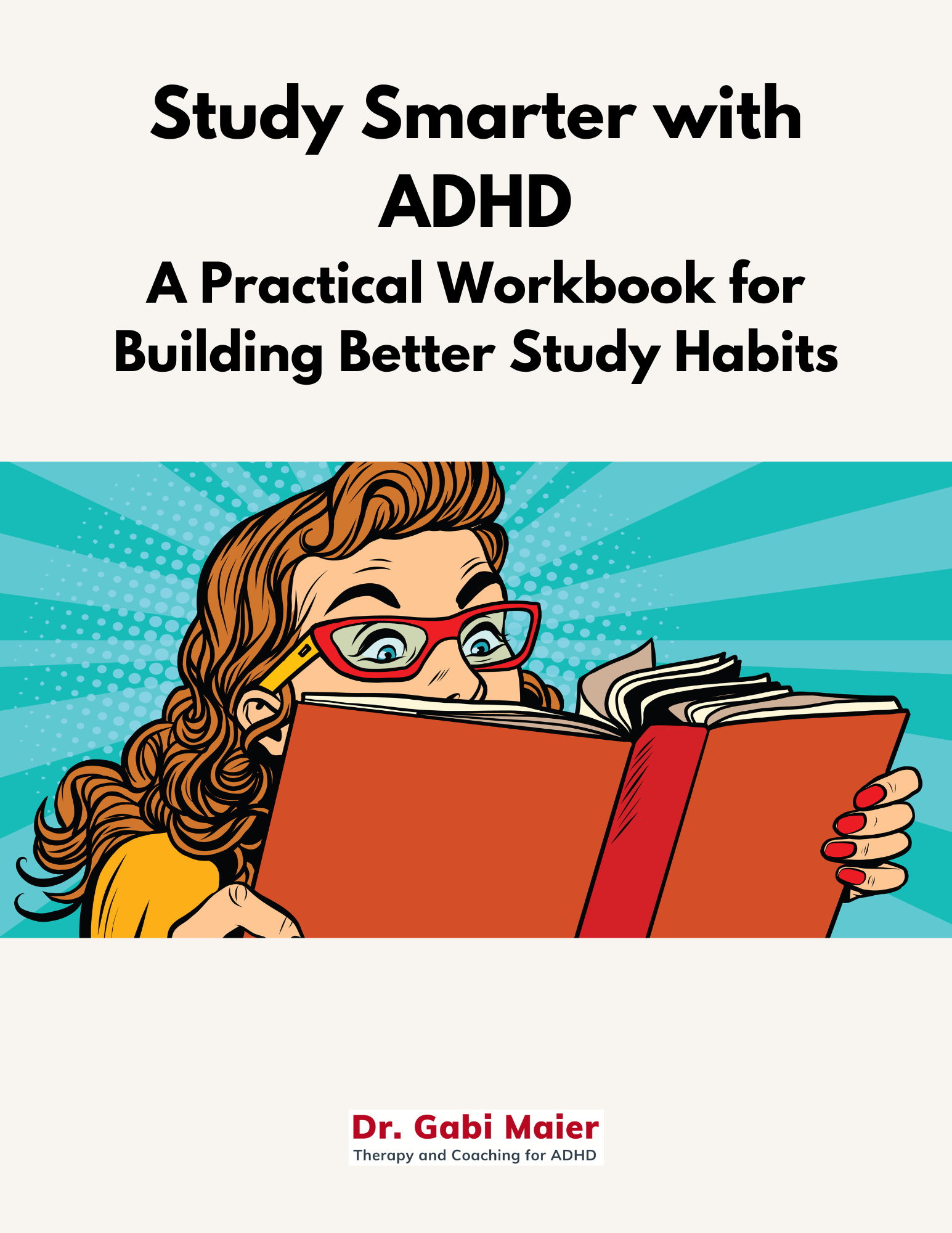
Studying with ADHD shouldn’t feel like a constant battle.
If getting started, staying focused, or figuring out how to study is taking more energy than the studying itself, my free Study Smarter Workbook can help. It offers simple, ADHD-friendly strategies to make studying more manageable - without expecting you to just try harder.
Get the free Study Smart Workbook here
Radical Acceptance: Letting go of the fight
Of all the DBT skills, this is probably the one I talk about most often with students experiencing burnout because it is often exactly what they need. Many students spend an enormous amount of energy arguing with reality. They tell themselves: "I shouldn't be struggling this much." "I should be able to handle a full course load." "I shouldn't need a break." "Everyone else is managing."
These thoughts are understandable. They come from a place of disappointment, frustration, and sometimes fear. But they also keep students trapped. The reality is that burnout has already happened. The exhaustion is already here. The semester may already have gone differently than planned. Radical Acceptance means acknowledging those facts without approving of them. It means saying: "I don't like this situation, but this is where I am right now."
When students first hear this idea, they sometimes worry that acceptance means giving up. In reality, the opposite is true. Acceptance is what allows us to move forward. As long as we are fighting reality, we are spending our energy wishing things were different. Once we accept where we are, we can begin asking a much more useful question: "Given where I am right now, what do I need?" Sometimes the answer is a lighter course load. Sometimes it is accommodations. Sometimes it is therapy, coaching, medication, or simply rest. Whatever the answer may be, it becomes much easier to find once we stop fighting the fact that we are struggling.
Recovery is not failure
One of the most important things I want students to understand is that taking a break does not mean you have failed. I have worked with students who took a semester off, focused on their mental health, learned new coping skills, and returned stronger than before. I have also worked with students who reduced their course load, changed their study strategies, or sought accommodations that made a huge difference. Recovery is not a detour from your education. Sometimes it is part of the journey.
A final thought
If you are struggling with academic burnout, please know that you are not alone. Many intelligent, capable, hardworking students with ADHD eventually hit a wall, because they have been carrying an invisible load for a very long time. Burnout is not a sign that you are incapable of succeeding. It is often a sign that something needs to change.
Be gentle with yourself. Take your exhaustion seriously. And remember: your worth is not measured by your productivity, your grades, or how quickly you finish your degree. You are allowed to rest. You are allowed to recover. And you are allowed to find a path forward that works with your brain instead of constantly fighting against it.
Frequently Asked Questions
What does ADHD burnout feel like?
ADHD burnout can feel like physical and mental exhaustion, loss of motivation, difficulty concentrating, emotional overwhelm, or feeling unable to start even relatively simple tasks. Students may also begin avoiding lectures, assignments, emails, or other academic responsibilities.
Why are students with ADHD more vulnerable to academic burnout?
Students with ADHD often expend considerable energy managing executive functioning challenges such as planning, organization, time management, emotional regulation, and task initiation. Over time, constantly compensating for these difficulties can become exhausting—especially in college or university, where students are expected to manage much more independently.
How do I know whether I'm burned out or just procrastinating?
Procrastination usually involves delaying a particular task, while burnout tends to affect your overall ability to function. If you feel persistently exhausted, emotionally depleted, unable to concentrate, disconnected from subjects you once enjoyed, or overwhelmed by even small academic tasks, burnout may be playing a role.
Can you recover from academic burnout?
Yes. Recovery may involve rest, reducing your workload, changing study strategies, improving sleep and other basic routines, seeking accommodations, or getting professional support. Recovery doesn't always mean returning to exactly the way you were working before. Sometimes it means finding a more sustainable way forward.
Should I take a semester off because of ADHD burnout?
There is no single answer that is right for everyone. For some students, reducing their course load or taking time away from university can provide valuable space to recover and develop better support systems. For others, accommodations and changes to their workload may be enough. If you're considering taking time off, it can help to discuss your situation with your university and an appropriate healthcare professional.
Did this article resonate with you?
If you often find yourself struggling with your ADHD symptoms and would like some support, I'd be happy to help. Together, we'll develop practical strategies that fit your life, your strengths, and your goals. In a free 30-minute consultation, we'll explore whether my approach is the right fit for you.
For teenagers (15+) and adults.
Enjoyed this article?
Every other week, I publish a new article with evidence-based insights and practical strategies to help you better understand and manage ADHD in everyday life.